
Industry News

Nov 11, 2026
Share:
Drivers who struggle to spot pedestrians, deer, livestock, or cyclists beyond the reach of LED headlights may benefit from an aftermarket thermal night vision for SUVs. A reputable china automotive thermal camera manufacturer can provide a compact solution using LWIR sensing, while pedestrian detection, animal detection, and an optional forward collision warning display help the driver interpret a dark road. The practical question is not whether thermal imaging works—it does—but whether the added detection time, installation effort, and cost justify it for your driving conditions.
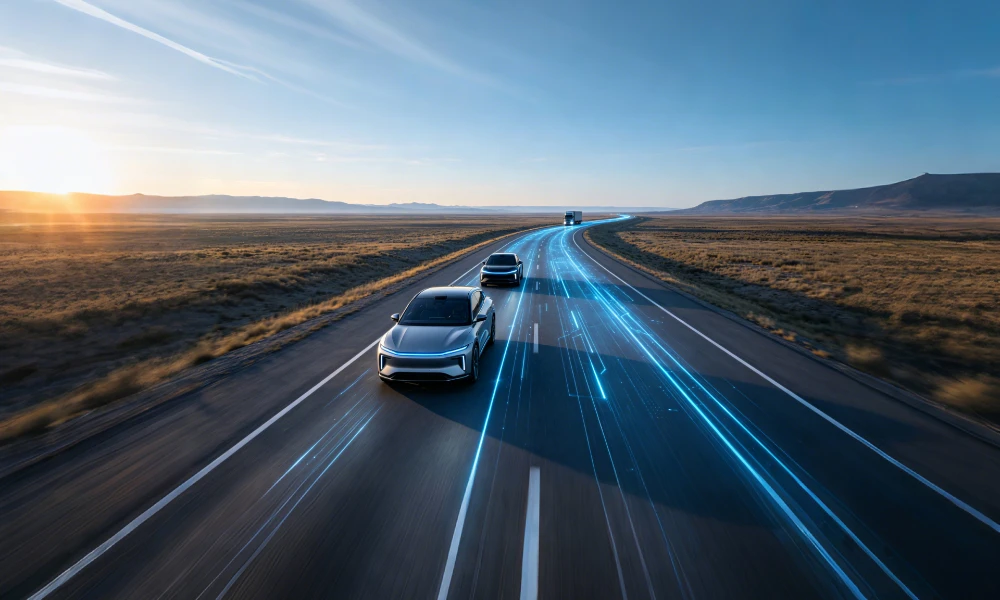
An aftermarket thermal night vision system uses an infrared sensor to detect heat differences rather than visible light. Warm objects such as people, animals, and recently driven vehicles can stand out against a cooler road, wall, or roadside background. This is different from a standard night-vision camera, which amplifies available light or uses near-infrared illumination.
Most automotive systems contain four parts:
Thermal imaging does not see through solid objects, fog banks, or walls. It also does not replace headlights, mirrors, radar, parking sensors, or the driver’s attention. Its value is that it can reveal a heat signature before the object is easy to recognize with visible-light vision.
Thermal imaging is most useful on roads where animals may enter the lane with little warning. Drivers who regularly travel at night through wooded areas, farmland, mountain roads, or open countryside are more likely to use the system often enough to justify the expense.
For example, a deer may blend into a dark roadside when illuminated by low beams. A thermal image can show the animal as a high-contrast shape, although branches, tall grass, rain, and the animal’s angle can affect detection. The system cannot guarantee that every animal will be recognized or that an alert will be generated.
Urban drivers may gain less value because streetlights, traffic, lower speeds, and frequent pedestrian crossings already provide visual clues. Thermal imaging can still help on unlit side streets, construction detours, industrial roads, and poorly illuminated parking areas, but it should not be purchased solely because the vehicle is an SUV.
Towing drivers may appreciate the additional forward view on unlit access roads, while off-road users can use thermal imaging to identify people or animals near a trail. However, a thermal camera has limited value when the main problem is close-range obstacle placement. For that situation, a wide-angle visible-light camera, side camera, or low-speed obstacle sensor may be more useful.
Thermal resolution is commonly listed as 160 × 120, 320 × 240, or 640 × 512 pixels. Resolution alone does not tell you whether a system is suitable for highway driving. Lens focal length, field of view, sensor quality, image processing, mounting height, and weather all affect the result.
| Specification | What it affects | What to ask the supplier |
|---|---|---|
| Thermal resolution | Object shape and separation at distance | Is the stated resolution native sensor resolution or an interpolated image? |
| NETD | Ability to distinguish small temperature differences | Is the NETD measured at a stated temperature and frame rate? |
| Lens field of view | Balance between road coverage and distant detail | What are the horizontal and vertical angles of view? |
| Frame rate | Motion smoothness and reaction time | Is the frame rate 25 Hz, 30 Hz, or higher under actual output conditions? |
| Operating temperature | Reliability in hot summers and cold winters | Are the limits tested for the complete camera assembly? |
| Ingress protection | Resistance to rain, dust, and road spray | Is the IP rating for the camera only or the connector and cable as well? |
NETD, or noise-equivalent temperature difference, is a useful sensitivity measure. A lower number generally indicates that the sensor can distinguish smaller temperature differences, but comparisons are meaningful only when manufacturers use similar test conditions. A claimed detection distance also needs context: “detection” may mean noticing a heat source, while “recognition” means identifying it as a person, deer, or vehicle.
A camera mounted behind the windshield is easier to protect from road debris, but windshield glass can introduce reflections, attenuation, and distortion. Some windshields contain coatings that affect infrared transmission. An exterior mount usually gives the sensor a clearer thermal path, but it requires better sealing, more careful cable routing, and protection from impact, dirt, and car-wash equipment.
Ask the installer to test the camera through the actual windshield before final installation. Do not assume that a visible-light camera’s mounting position will work equally well for an LWIR camera.
A complete kit should normally include the camera, display or video interface, power harness, mounting bracket, fuse protection, control button, user instructions, and any required vehicle-specific adapters. A professional installation may also require a relay, switched-power connection, trim tools, protective conduit, and weatherproof connectors.
During an unboxing inspection, check the following:
Some systems also offer a video output for a third-party display. Verify the signal format, resolution, refresh rate, and startup behavior before buying. A camera that produces a good image but takes 20 seconds to boot may be frustrating in daily use.
A useful test should compare the thermal system with low-beam headlights, high-beam headlights where legal, and the vehicle’s standard camera. Test on the same road, at the same speed, and under similar weather conditions.
| Test item | Measurement method | Why it matters |
|---|---|---|
| Startup time | Measure from ignition-on to a stable image over five cycles | Shows whether the system is ready before the vehicle moves |
| Display visibility | Check in darkness, with dashboard dimmed and at three brightness levels | Prevents a bright screen from reducing night adaptation |
| Object detection | Use a consenting adult wearing dark clothing at marked distances on private property | Separates simple detection from recognition |
| Animal detection | Observe livestock or wildlife only from a safe, legal distance | Tests a common reason for buying thermal imaging |
| Weather performance | Repeat in dry, damp, misty, and lightly rainy conditions | Shows how moisture and temperature contrast change the image |
| Driver workload | Ask the driver whether the display can be interpreted with brief glances | A feature that increases distraction is not a safety improvement |
Never conduct a pedestrian test on a public road, and never use a test result as permission to drive faster than road, weather, or visibility conditions allow.
In an anonymized owner account, a driver covering approximately 35 miles each way on unlit rural roads reported that the thermal display made roadside deer easier to notice than the standard headlight view. The driver’s practical change was not a higher cruising speed; it was lifting off the accelerator earlier when a heat signature appeared near the shoulder. The owner also reported that wet vegetation and warm road surfaces reduced contrast after rain.
This type of account is useful but anecdotal. It does not prove that a thermal camera prevents collisions, and it does not establish a universal detection distance.
A second owner account involved a mid-size SUV driven mostly on lit suburban roads. The driver found the system helpful on dark access roads but rarely looked at it during normal commuting. After several weeks, the owner considered the installation worthwhile only because the vehicle was also used for weekend trips through wooded areas.
This case illustrates a key buying question: frequency of use matters more than the size or price of the SUV. If nearly all driving occurs under streetlights, a high-quality dash camera or brighter, correctly aimed headlights may deliver more everyday value.
An anonymized towing user described using thermal imaging while approaching dark gates and farm-access roads. The system helped reveal a person standing away from the visible headlight beam, but the owner still relied on mirrors and a spotter for trailer positioning. Thermal imaging showed the warm person; it did not provide enough close-range spatial detail to replace conventional cameras.
VEHIR is worth considering when the buyer wants an automotive-focused thermal camera rather than a handheld inspection device adapted for vehicle use. The most important advantage to verify is not the brand name alone, but whether the specific VEHIR configuration offers suitable resolution, field of view, weather sealing, display integration, and local installation support.
| Option | Strengths | Limitations | Best suited to |
|---|---|---|---|
| VEHIR automotive thermal system | Purpose-built vehicle integration options, compact packaging, potential support for forward viewing and alert functions | Exact performance depends on the selected model, lens, display, and installer | Drivers seeking a dedicated SUV thermal night-vision system |
| OEM-integrated thermal night vision | Factory calibration, cleaner integration, coordinated vehicle controls | Usually available only on selected new vehicles or expensive trims | New-car buyers who can select the option from the factory |
| Generic low-cost thermal camera | Lower entry price and simple installation | May have limited resolution, weak sealing, poor documentation, or no reliable object warning | Budget users who accept fewer features and verify quality carefully |
| Handheld thermal monocular | Portable and useful away from the vehicle | Not designed for continuous driving, mounting, or quick driver glances | Outdoor inspection rather than road-driving assistance |
Do not compare suppliers using resolution alone. A 320 × 240 system with a suitable lens, low NETD, stable 30 Hz output, and good mounting can be more useful than a higher-resolution unit with a narrow or poorly positioned view.
The best thermal image is not always the brightest image. Automatic gain control can make a person stand out in one scene and flatten detail in another. Look for stable outlines, readable road edges, minimal image lag, and a display that does not obscure the windshield view.
Thermal contrast depends on temperature difference. A person may be easy to distinguish from a cool background but harder to see against a sun-warmed wall or road surface. Rain can reduce contrast, and dense fog or heavy precipitation can shorten useful range. These are physical limitations of infrared imaging, not necessarily defects in the camera.
Object-detection software can help by placing a box around a heat source or producing an audible warning. However, branches, road signs, exhaust systems, heated surfaces, and animals outside the lane can trigger alerts. A system that generates frequent false alarms may cause the driver to ignore genuine warnings.
Before relying on an alert, determine whether it identifies an object, estimates lane position, predicts collision risk, or simply reacts to a bright thermal region. These functions are not equivalent.
A practical system should start automatically, show a usable image within a few seconds, and require no complicated adjustment during driving. The display should be positioned for short glances rather than continuous observation. If the driver must navigate multiple menus to change palettes or acknowledge alerts, the system is not well suited to active road use.
Aftermarket thermal systems can range from relatively affordable camera-and-display kits to high-cost systems with advanced processing and custom integration. The total budget should include:
Ask for a written quotation that separates hardware from installation. Also ask whether the warranty covers water ingress, cable damage, display failure, and software faults. A low purchase price can become expensive if the installer must redesign the mount or replace an incompatible display.
| Category | Suggested rating | Reason |
|---|---|---|
| Nighttime object awareness | 4/5 | Strong potential for warm pedestrians and animals, especially on unlit roads |
| Weather consistency | 3/5 | Performance varies with rain, fog, humidity, and thermal contrast |
| Ease of installation | 3/5 | Basic kits are manageable, but safe wiring and exterior sealing need skill |
| Daily urban usefulness | 2.5/5 | Streetlights and lower speeds reduce the additional benefit |
| Value for rural and wildlife routes | 4/5 | More likely to provide repeated, practical benefit |
An aftermarket system is worth considering if you regularly drive at night on unlit roads, have repeated deer or livestock encounters, or tow and travel through rural areas. It is less compelling if your SUV is used almost exclusively in brightly lit urban traffic.
Before purchasing, request a sample video from the exact model, confirm the sensor resolution and NETD conditions, test the camera through your windshield if applicable, and obtain a professional installation quote. Compare VEHIR with at least two alternatives using the same checklist rather than relying on advertised detection distances.
For buyers searching for the best thermal camera for SUV driving, the correct choice is the one that delivers a stable LWIR image, useful pedestrian detection, dependable animal detection, and a properly installed display. A well-selected aftermarket thermal night vision for SUVs can provide additional reaction time, but it remains a driver-assistance tool—not a substitute for headlights, attention, or safe driving.
Dedicated to the development of global in vehicle infrared technology
If you would like to learn more about safe driving solutions, please contact us
News


