
News
Our professional after-sales service team, adhering to the philosophy of "Boundless Night Vision, Worry-Free Service," continuously innovates its service model and enhances its professionalism, providing customers with a more professional, convenient, and efficient service experience.

Aug 10, 2026
Share:
The U.S. National Highway Traffic Safety Administration (NHTSA) requires all new vehicles to meet compliance requirements by September 1, 2029, including:
Achieving complete collision avoidance at speeds of up to 62 mph (approximately 100 km/h);
Providing pedestrian detection capabilities during both daytime and nighttime conditions;
The regulation is expected to save at least 360 lives and prevent more than 24,000 injuries annually.
The 2026 Euro NCAP protocol introduces more than 1,200 additional testing scenarios, with a stronger focus on comprehensive environmental perception capabilities. It significantly expands testing requirements for nighttime driving, low-light conditions, rain, fog, and other challenging environments.
Released on July 30, 2026, and scheduled for full implementation on July 1, 2027, GB 44721—2026 is China’s first mandatory national standard for L3/L4 autonomous driving systems.
Key requirements include:
Full-scenario perception: Autonomous driving systems must achieve all-weather and all-environment perception capabilities.
Safety redundancy: The standard specifies that when a single perception fault occurs without causing system failure, it must not result in hazardous events.
Enhanced perception performance: Strict requirements are introduced for nighttime, low-light, rain, fog, and backlighting scenarios.
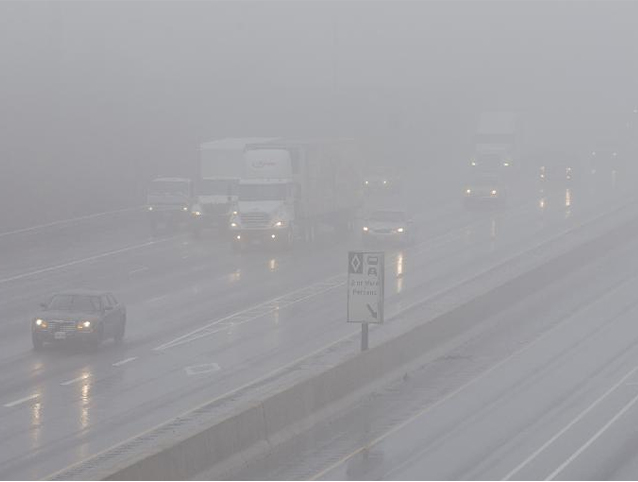
Traditional visible-light cameras experience significant performance degradation in nighttime conditions, glare, rain, and fog. Infrared thermal imaging, however, uses temperature differences to create images and is completely independent of lighting conditions.
It can operate reliably in extreme environments such as complete darkness, strong light exposure, and heavy fog, making it a promising technology solution for achieving all-scenario perception and safety redundancy requirements in future autonomous driving systems.
Dedicated to the development of global in vehicle infrared technology
If you would like to learn more about safe driving solutions, please contact us
News