News

Our professional after-sales service team, adhering to the philosophy of "Boundless Night Vision, Worry-Free Service," continuously innovates its service model and enhances its professionalism, providing customers with a more professional, convenient, and efficient service experience.

Home - News - Vehicle-mounted infrared cameras: Safety value and application prospects driven by regulations

Vehicle-mounted infrared cameras: Safety value and application prospects driven by regulations

Jul 30, 2026

Share:

With the upgrading of global automotive safety regulations, infrared cameras are shifting from being a "luxury option" to a "key technology" for achieving advanced safety features. In the dark and in adverse weather conditions, traditional sensors have obvious limitations, while infrared technology, with its unique advantages, is witnessing a critical turning point in industry development.

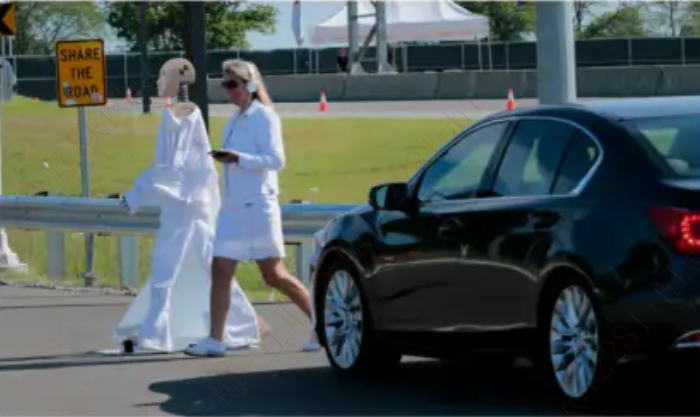
The US NHTSA (National Highway Traffic Safety Administration) has issued the "Federal Motor Vehicle Safety Standard No. 127 (FMVSS 127) regulations, which require that by 2029, all new vehicles must be equipped with a pedestrian automatic emergency braking (PAEB) system that can function effectively at night. The testing requires that the vehicles be able to avoid collisions with pedestrians under environmental lighting conditions of less than 0.2 lux (no street lights). This regulation directly challenges the performance limits of traditional cameras and radars that rely on visible light, creating a clear market demand for long-wave infrared (LWIR) cameras capable of detecting human body heat radiation.

The 2026 version of the Euro NCAP testing regulations in Europe has explicitly prioritized the protection of vulnerable road users (VRU) at night, requiring AEB systems to have the ability to detect in greater distances and darker environments. Additionally, the EU regulations have mandated that all new vehicles must be equipped with a driver fatigue and distraction monitoring system based on cameras starting from July 2026. This has accelerated the rapid adoption of near-infrared (NIR) technology in the interior perception field.
(The picture is from the Internet)


The core value of infrared cameras lies in the uniqueness of their physical sensing principle. They do not rely on ambient light but instead passively receive the thermal radiation (long-wave infrared) emitted by objects. Therefore, they can:

①Penetrate darkness and glare: In night conditions, at tunnel entrances and exits where there are alternating light and dark areas, as well as under the glare of oncoming vehicles, they can still capture clear images and effectively detect pedestrians and animals.

②Ignore visual camouflage: They can clearly identify pedestrians wearing dark clothing and hidden in shadows, solving the failure of visible light cameras in low-contrast scenarios.

③Effective detection range is long: Advanced infrared systems can detect up to 350 meters, far exceeding the effective range of car headlights, providing valuable reaction time for AEB systems on high-speed vehicles.

Previous:

None

Next:

How Automotive Night Vision Systems Detect Pedestrians Beyond Headlight Range

Dedicated to the development of global in vehicle infrared technology

If you would like to learn more about safe driving solutions, please contact us

News

Vehicle-mounted infrared cameras: Safety value and application prospects driven by regulations
How Automotive Night Vision Systems Detect Pedestrians Beyond Headlight Range
All-in-One Thermal Camera Systems: Pros and Cons for Fleet Operators
How to Evaluate Screen Visibility for Daytime Use in Thermal Camera Systems
Mounting Positions for Thermal Cameras with Integrated Displays in Trucks
Display Resolution and Brightness Requirements for In-Cab Thermal Monitors

Vehicle-mounted infrared cameras: Safety value and application prospects driven by regulations

Explore how global automotive safety regulations are accelerating the adoption of vehicle-mounted infrared cameras. Learn how LWIR and NIR technologies enhance night vision, pedestrian detection, automatic emergency braking (AEB), and driver monitoring systems for safer intelligent driving.

Jul 30,2026

How Automotive Night Vision Systems Detect Pedestrians Beyond Headlight Range

Navigating at night can pose significant challenges, particularly when it comes to spotting pedestrians beyond headlight range. As a driver, I’ve often felt the anxiety of not being able to see clearly at night, and I’m sure you’ve experienced this too. Fortunately, automotive thermal night vision systems like those from VEHIR are revolutionizing nighttime driving. In this article, I will

Jul 30,2026

All-in-One Thermal Camera Systems: Pros and Cons for Fleet Operators

In today's competitive logistics and transportation industry, fleet operators are increasingly turning to all-in-one thermal camera systems to enhance their operations. These advanced systems, equipped with thermal imaging and video display capabilities, promise improved safety, efficiency, and monitoring. However, understanding the pros and cons of these technologies is crucial for making an

Jul 29,2026

How to Evaluate Screen Visibility for Daytime Use in Thermal Camera Systems

Thermal cameras operate differently in daytime conditions due to light interference. Evaluating screen visibility ensures optimal performance and usability, enabling better decision-making in various scenarios.

Jul 28,2026

Mounting Positions for Thermal Cameras with Integrated Displays in Trucks

Mounting positions for thermal cameras with integrated displays in trucks can greatly affect their efficiency. Proper installation helps drivers monitor their surroundings safely, ensuring a smoother operation. Many truck operators face challenges regarding visibility in low light or adverse weather conditions. This is where thermal imaging plays a crucial role. These cameras allow for real-time

Jul 27,2026

Display Resolution and Brightness Requirements for In-Cab Thermal Monitors

Heat detection is essential in automotive applications, especially when using an in-cab thermal monitor. These devices help drivers see temperature variations in real time. An effective thermal camera must have the right display resolution for clarity and sufficient brightness to be seen in various lighting conditions. Poor quality can lead to dangerous situations, especially at night or in

Jul 24,2026